mLNG: pipeline letdown turned into LNG.
Feed gas is the refrigerant. A turbo-expander drives the turbo-compressor and the expansion does the refrigeration across a brazed aluminum primary exchanger. Where a city gate or regulator station already drops 600 psig or more, that free letdown becomes LNG at under 150 kWh per tonne.
Overview
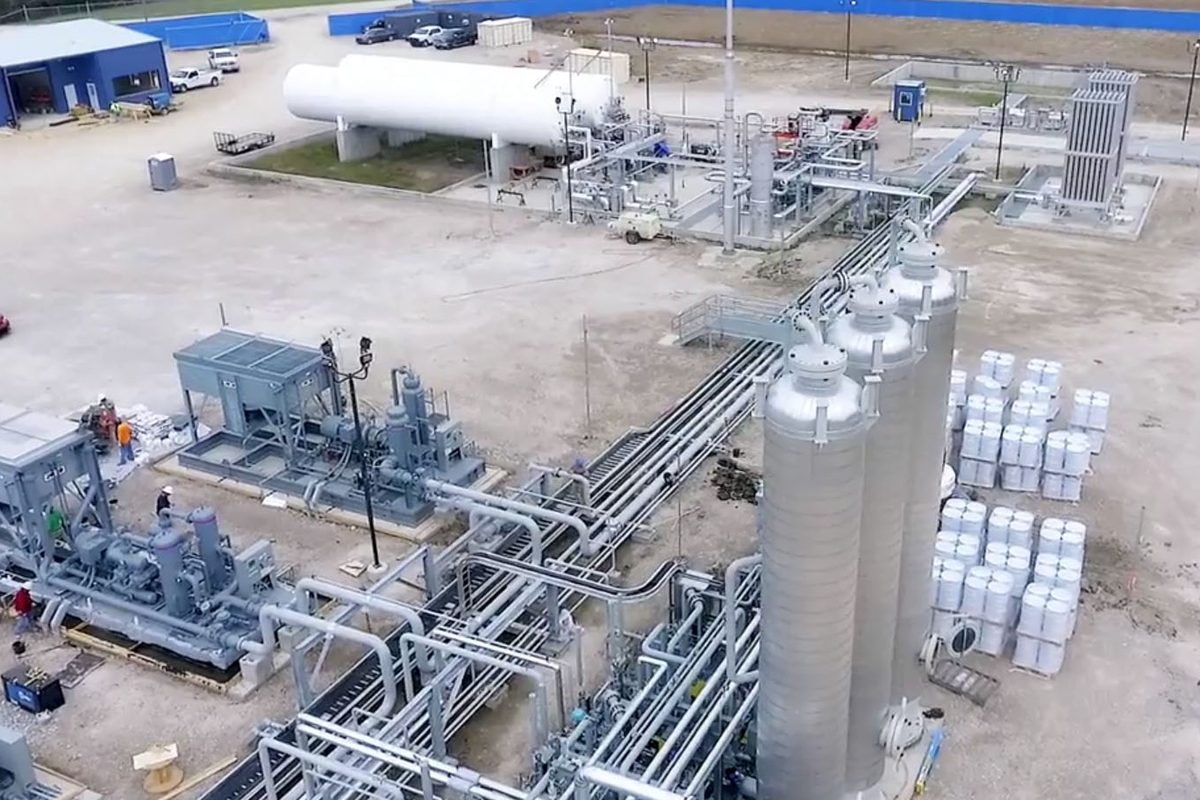
mLNG uses the feed gas itself as the working fluid. High pressure gas drives a turbo-expander, the expander drives a turbo-compressor, and the expansion does the refrigeration in a brazed aluminum heat exchanger. Letdown gas leaves as tail gas to the low pressure system, so at a pressure letdown site the plant runs almost entirely on pressure the pipeline already has.
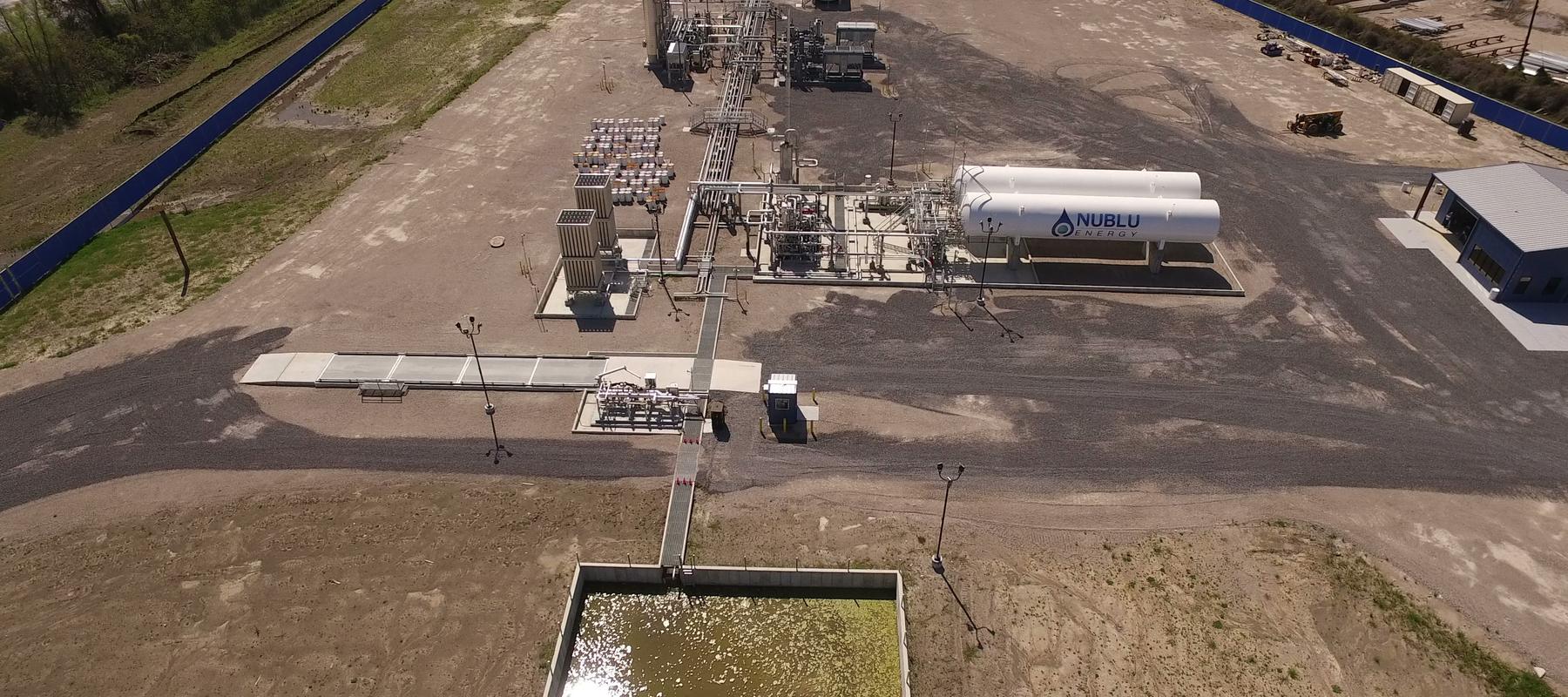
Where no letdown exists, the cycle runs in closed-loop recycle with a recycle compressor, at 600 to 800 kWh per tonne. The platform is pre-fabricated at 25 TPD and is the production version of the cycle that has run at Port Allen since December 2017.
Key specifications
| Cycle | Feed gas refrigerant, turbo-expander driving a turbo-compressor, brazed aluminum primary exchanger |
|---|---|
| Capacity | 25 TPD pre-fabricated |
| Specific power, letdown case | Under 150 kWh per tonne with a 600 psig or greater letdown |
| Specific power, recycle case | 600 to 800 kWh per tonne in closed-loop recycle |
| Feed gas | 250 to 950 psig, closed-loop recycle or pressure letdown |
| LNG product | -255 °F at about 14.5 psig (1 barg), can be sub-cooled |
| Pretreatment | Inlet separation, sweetening, water chilling and molecular sieve dehydration, mercury guard bed, optional UOP SepraSIV polishing |
| Long-lead items | Turbo-expander and brazed aluminum heat exchanger |
| Lead time | 12 to 15 months to a liquefier on site |
| Relative capital | Highest of the three NuBlu platforms |
| Field history | Port Allen, Louisiana, 30,000 GPD, operating since December 2017 |
Specific power depends on the letdown available at the site. Figures are indicative for the 25 TPD class and are confirmed per site.
Why mLNG
Free refrigeration where letdown exists
A city gate dropping 600 psig or more hands the plant its refrigeration. mLNG turns that into LNG at under 150 kWh per tonne, better than the export mega-plants.
Field proven since 2017
The cycle has run at Port Allen for more than eight years, through PHMSA and DOT audit and a change of ownership.
Modular pretreatment
Sweetening, dehydration and heavy hydrocarbon polishing engineered to the gas rather than a standard go-by design.
A colder, denser product
LNG leaves at -255 °F and about 1 barg, which improves density and storage efficiency and cuts boil-off.
Recycle mode where there is no letdown
The same plant runs closed-loop with a recycle compressor at 600 to 800 kWh per tonne.
One team from FEED to first LNG
NuBlu's engineering group has executed LNG work from 14,000 GPD peak shavers to 500,000 GPD multi-train facilities, and built and operated its own plant.
Typical applications
- City gate and regulator station letdown sites
- Utility peak shaving and pipeline-fed merchant LNG
- Data center and behind-the-meter power supply
- Fleet fueling for trucking, rail and drilling
- Marine bunkering for harbor craft and short-sea fleets
What's included
- Liquefier skids, pretreatment modules and interconnecting piping, engineered to the site gas
- LNG storage, pump and loadout design, including BOG recovery
- MCC, PLC and instrument air engineering, control room and utility equipment
- Start-up spares, first fills and commissioning support
- Initial operating support and optional service contract
Engineering and aftermarket support
NuBlu delivers liquefaction as equipment supply, as a fuel supply partnership, or as energy as a service. Each engagement starts with the site: gas composition and pressure, offtake volume, power and an LNG loadout path.